
Summer Wedding Survival Guide for South Asian Celebrations
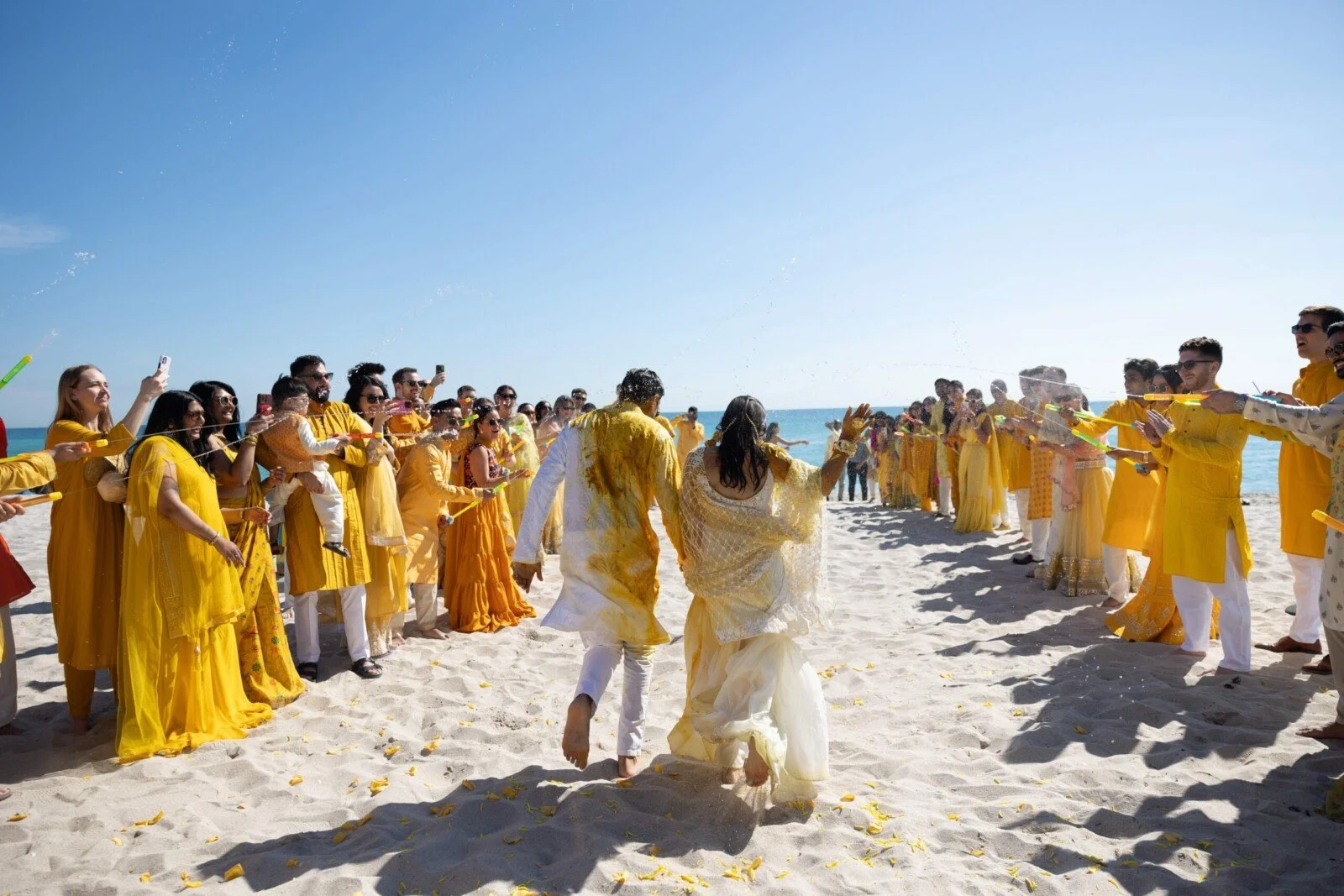
Image credits: A photo of one of our previous clients’ Destination Haldi event.
Photographer: Melannie Morfa Photography
Venue: Loews Miami Beach hotel
The 95-Degree Reality Check: Surviving a Summer Shaadi Without Melting Your Makeup (or Your Sanity)
You look like a Bollywood princess. Your intricate, 15-pound lehenga is stunning, your Kundan jewelry is perfectly placed, and your makeup is absolutely flawless. There is just one problem: it is mid-July, it’s 95 degrees with 80% humidity, and you are about to sit directly next to a literal, blazing fire pit for a two-hour Hindu ceremony.
Let's be brutally honest: Summer South Asian weddings are stunning, but they are also a logistical and physical endurance test. The combination of heavy ethnic wear, large crowds, and outdoor Baraats can turn your dream day into a sweaty, uncomfortable ordeal if you aren't prepared. But fear not! You don't have to sacrifice style for comfort. Here is your ultimate Summer Indian wedding survival guide, packed with expert tips to keep you and your guests cool, calm, and camera-ready.
Image credits: Stock photography via Unsplash images.
1. Fabric First: Break Up With Velvet and Raw Silk
The biggest mistake a summer bride or groom can make is choosing winter fabrics for a July wedding.
The Reality: Wearing a velvet lehenga or a thick, brocade Sherwani in the summer sun will trap heat against your skin, leading to exhaustion (or worse, fainting) before the Pheras even begin.
The Survival Tip: Embrace the "lightness." Opt for fabrics that breathe and flow. Organza, chiffon, georgette, and lightweight crepe are your best friends for a summer Desi wedding. An organza dupatta catches the summer breeze beautifully and weighs a fraction of what velvet does.
2. The Mandap Oasis: Engineered for Airflow
Outdoor ceremonies are gorgeous, but an unshaded Mandap in the midday sun is a recipe for disaster.
The Reality: You, your partner, and your parents will be sitting still for over an hour, often next to the sacred fire (Havan).
The Survival Tip: When designing your outdoor Mandap, prioritize shade. Use thick, opaque floral canopies or solid draping on the roof. More importantly, hide high-powered, silent industrial fans behind the floral pillars pointing directly at the couple. Your guests need shade too—ensure the guest seating is covered by a tent or heavily shaded by trees.
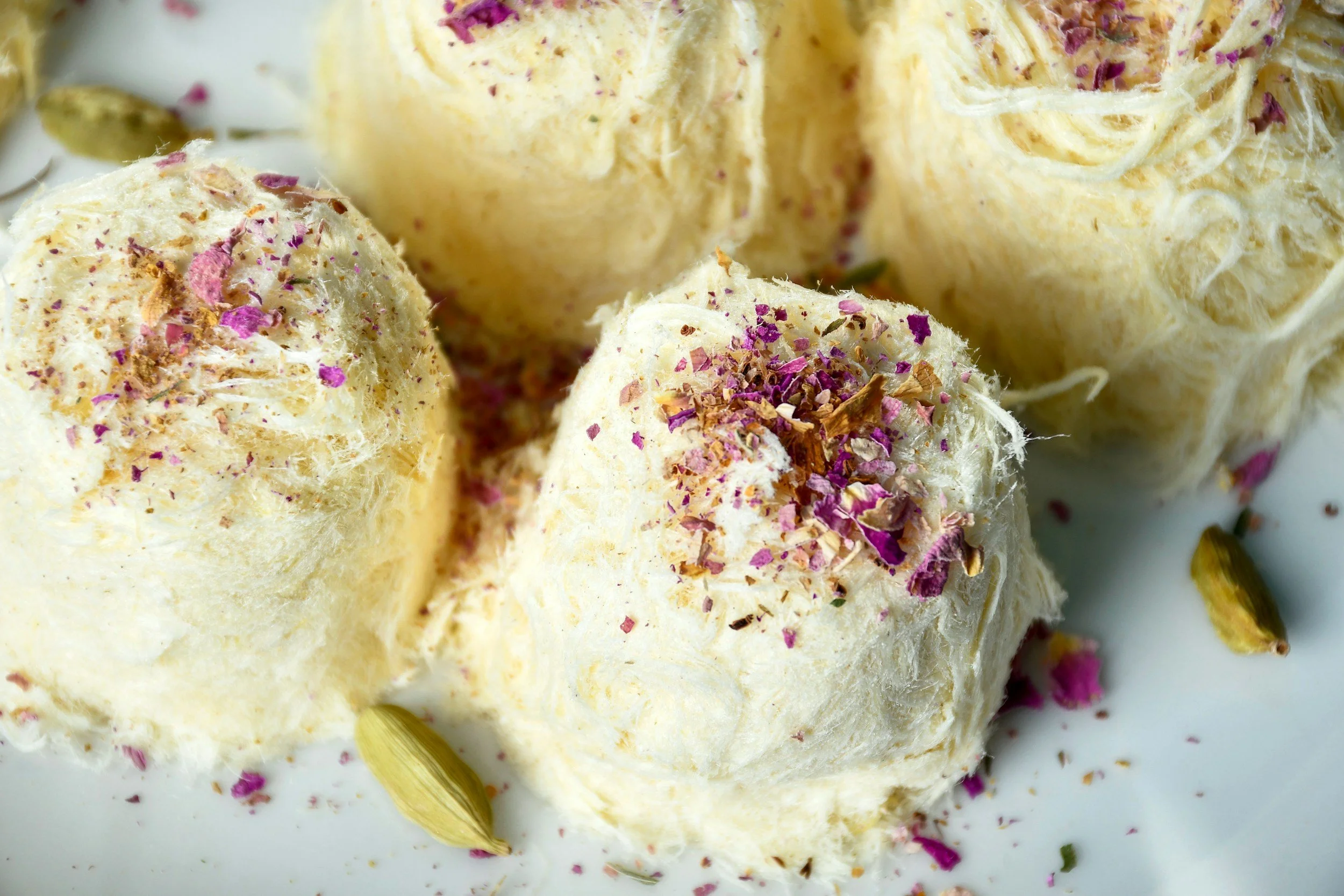
Image credits: Unsplash images.
3. The Hydration Station & Refreshment Revamp
Hot, heavy food and a sweltering day do not mix. You need to cool your guests down from the inside out.
The Reality: Serving hot chai and heavy samosas before a summer ceremony will leave your guests feeling sluggish and overheated.
The Survival Tip: Swap the traditional welcome drinks for an interactive "Cool Down" station. Serve fresh, chilled coconut water straight from the shell, mint-infused Nimbu Pani (Indian lemonade), or Rooh Afza spritzers. Consider a popsicle or Kulfi cart as a pre-ceremony treat.
4. Sweat-Proof Your Glam: The "Updo" Mandate
Summer humidity is the ultimate enemy of South Asian bridal hair and makeup.
The Reality: Those cascading, romantic Hollywood waves you saved on Pinterest will fall flat and stick to your sweaty neck within 20 minutes of the Baraat.
The Survival Tip: Wear your hair up for the outdoor events. A sleek, traditional floral bun (gajra) or a messy, textured updo keeps the hair off your neck and maintains its shape all day. For makeup, demand airbrush foundation and aggressive matte setting sprays from your MUA. Skip the heavy cream contours and stick to powder-based products.
5. The "Guest Comfort" Basket
Your guests are dressing up for you, so show them some hospitality by preparing for the elements.
The Reality: Aunties in silk sarees and uncles in full suits will be incredibly uncomfortable waiting for the ceremony to begin.
The Survival Tip: Place a "Summer Survival Station" at the entrance to the ceremony. Stock it with beautifully designed paper parasols, wooden sandalwood hand fans, custom sunglasses, and cold, scented wet towels. It’s a small, inexpensive touch that elevates the guest experience and keeps the complaining to an absolute zero.
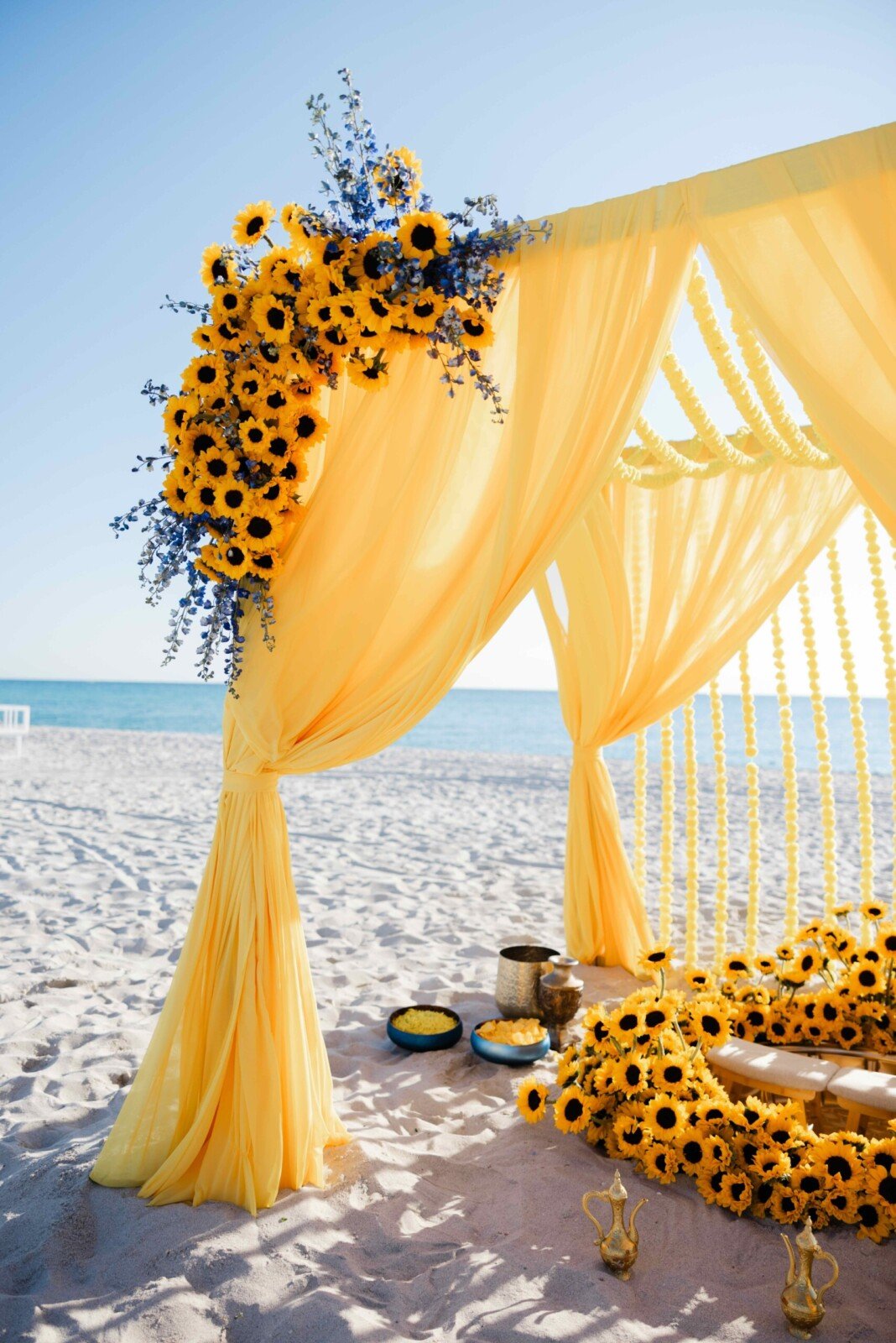
Image credits: A photo of one of our previous clients’ Destination Haldi event.
Photographer: Melannie Morfa Photography
Venue: Loews Miami Beach hotel
Decorator: Petal Productions
Conclusion: Beat the Heat, Keep the Glam
A summer Indian wedding can be the most vibrant, joyful celebration of the year if you plan for the weather rather than ignoring it. By prioritizing breathable fabrics, shaded logistics, and cooling refreshments, you ensure that the only thing melting on your wedding day is your partner's heart when they see you walk down the aisle.
Frequently Asked Questions (FAQs)
-
Keep it to an absolute maximum of 30 to 45 minutes. While a two-hour winter Baraat is great, dancing in the direct summer sun for that long will leave the groom, the family, and the guests completely exhausted before the ceremony even starts. Start the music on time, keep the energy high, and ensure servers are walking alongside the procession handing out cold water bottles.
-
Yes! Delicate flowers like hydrangeas, gardenias, and certain soft roses will wilt, bruise, and turn brown within an hour of sitting in direct sunlight and heat. For a summer Mandap, instruct your decorator to use hardy, heat-resistant flowers like marigolds, orchids, carnations, and tropical greenery. These can bake in the sun for hours and still look crisp in your wedding photos.
-
Use your wedding website's "Q&A" or "Dress Code" section to guide them. You can write something lighthearted but clear, such as: "Our ceremony will be held outdoors on the lawn. While we love a heavy silk saree or velvet sherwani, we highly recommend lightweight fabrics like organza, chiffon, linen, or georgette to keep you cool in the summer heat! Sunglass-friendly attire encouraged."
-
The goal is to avoid the midday sun (12:00 PM to 3:00 PM) entirely for outdoor events. We recommend kicking off an outdoor Baraat early around 8:30 AM, followed by a 9:30 AM ceremony. This allows you to wrap up the Pheras and get guests indoors for lunch by 11:30 AM or 12:00 PM, keeping everyone safely inside during the peak heat of the day.