The Ultimate Timeline for South Asian Wedding Planning
The Ultimate South Asian Wedding Planning Timeline: A Step-by-Step 12-to-18-Month Guide
Planning a standard wedding involves managing an evening; planning a South Asian wedding involves orchestrating a multi-day cultural festival. Between coordinating five distinct ceremonies, outfitting multiple generations in bespoke couture, curating multi-regional culinary menus, and managing 300 to 600+ guests, the logistical complexity can quickly rival a mid-sized corporate summit.
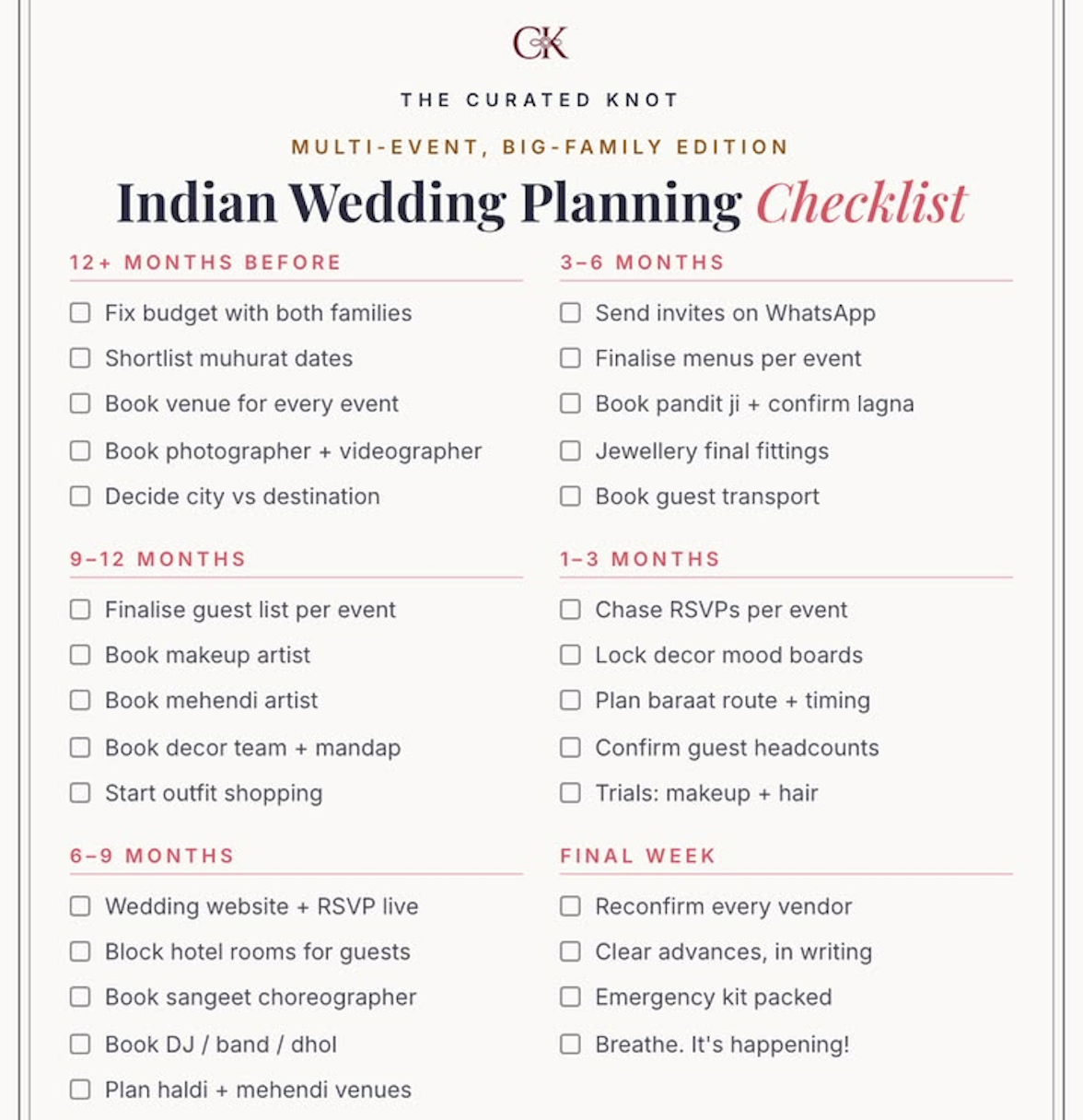
Image Credits: Pinterest
Standard 12-month wedding checklists found on mainstream wedding portals simply do not account for the realities of Indian wedding planning. They don't budget six months for hand-embroidered bridal lehengas shipped from Delhi, account for securing auspicious muhurat dates, or factor in local fire marshal permits required for an indoor sacred flame (Havan).
Whether you are hosting a sprawling destination weekend in Cancun or booking grand ballroom suites across New Jersey, New York, Texas, or California, this comprehensive 12-to-18-month South Asian wedding planning timeline gives you an actionable, stress-tested blueprint from engagement to your grand reception send-off.
Why Standard Wedding Timelines Fail for South Asian Celebrations
To keep your sanity and budget intact, you must recognize early that Indian weddings run on entirely different operational rules:
Multi-Space Bottlenecks: You aren't booking one room for six hours. You require multiple venues, ballrooms, or outdoor pavilions across three to four days (Haldi, Mehndi, Sangeet, Ceremony, and Reception).
Specialized Vendor Scarcity: There are only so many premier South Asian DJs, dhol players, Mandap designers, and authentic live-station caterers in any given region. Top-tier specialists often book out 14 to 18 months in advance.
Couture Production Lead Times: Custom bridal wear from designers like Sabyasachi, Manish Malhotra, or Anita Dongre—as well as bespoke bridal boutiques in Mumbai and Delhi—requires a minimum of four to six months of production, plus international transit and domestic tailoring.
Read More Here: How to Choose the Right Destination & Venue for a Luxury Multi-Day Indian Wedding
Phase 1: 12 to 18 Months Out — Laying the Strategic Foundation
The early phase is all about structural logistics. Making decisions without clear guest counts or budget frameworks creates compounding friction later on.
1. Secure Auspicious Dates (Muhurat) & Align Families
Consult with family priests or astrologers to identify propitious wedding dates based on your birth charts (kundalis).
Identify two to three alternate dates to give yourself leverage when negotiating with high-demand venues.
2. Determine Guest Counts & Budget Allocations
Build your guest list into tiered segments (Tier A: Immediate family/VIPs; Tier B: Extended family; Tier C: Parents' friends/colleagues).
Remember that guest counts fluctuate across events: a Sangeet may host 350 guests, while the Saturday ceremony and reception might expand to 500+.
Factor in hidden operational costs: hotel room block attrition rates, outside catering buy-out fees, mandatory security, and service surcharges.
3. Hire a Specialized South Asian Wedding Planner
A dedicated luxury planner with South Asian expertise is non-negotiable. They navigate cultural protocol, liaise with temple priests, manage high-capacity outside catering contracts, and manage high-stress family dynamics with ease.
4. Lock In the Venue(s)
Tour properties capable of hosting high-volume guest counts.
Verify critical venue policies: outdoor Baraat route permissions, sound ordinance curfews, open-flame (Agni) compliance, and flexibility with outside licensed Indian caterers.
Read More Here:: The Knot - Understanding Hotel Room Block Contracts and Attrition
Phase 2: 9 to 12 Months Out — Locking in the Dream Team
With dates and venues secured, your next objective is contracting critical vendors whose calendars fill up fastest.
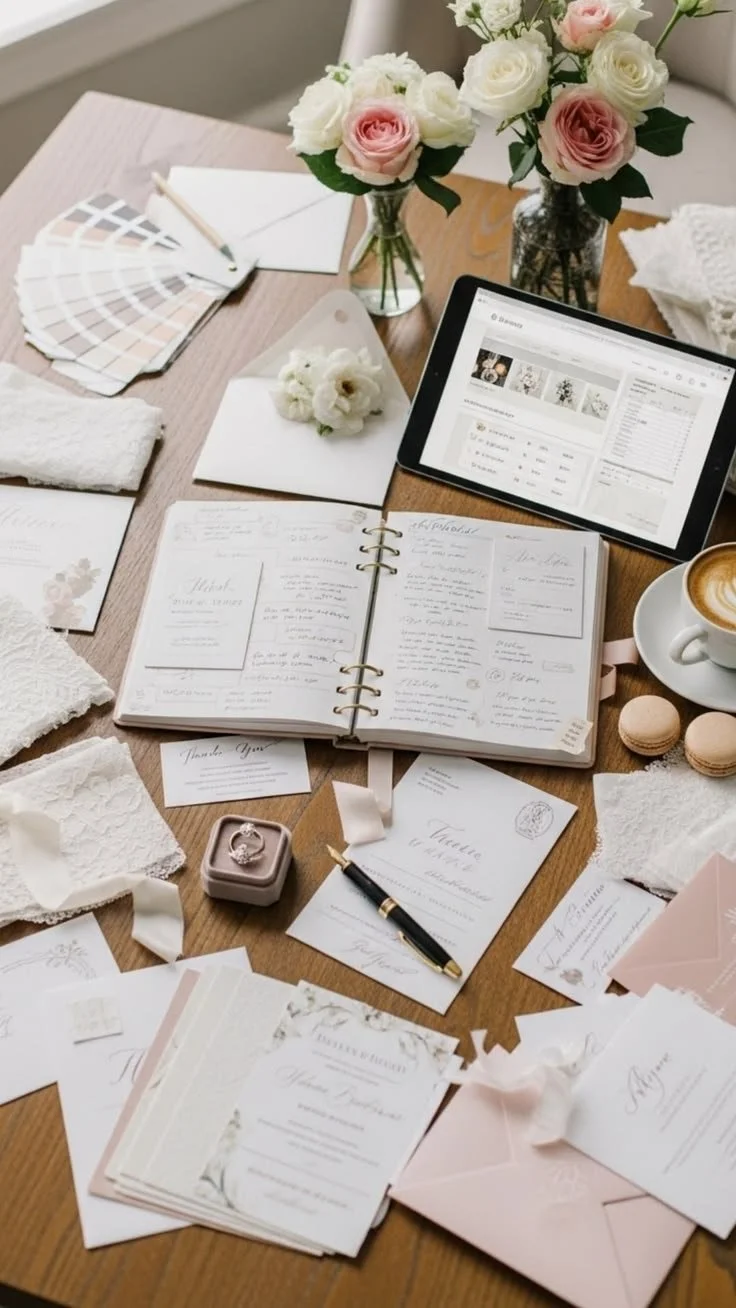
Image Credits: Pinterest
1. Secure Key Creative Vendors
Photo & Video Team: Look for cinematic storytellers who understand South Asian lighting challenges (dimly lit ballrooms, fast-moving Baraats, and vibrant, saturated jewel tones).
Decor & Floral Designer (Mandap Specialist): Book an event designer who can conceptualize distinct aesthetics across each event—from a rustic, sunlit Haldi to an architectural, modern Mandap.
Music & Entertainment: Book your DJ, MC, and live dhol players. The entertainment team sets the energy for your Sangeet and drives the momentum during the Baraat.
2. Finalize South Asian Catering & Bar Menus
Determine whether your venue offers qualified in-house South Asian culinary teams or permits an outside specialty caterer.
Plan diverse menus honoring distinct regional palates (e.g., Gujarati, Punjabi, South Indian, Indo-Chinese fusion) and dietary requirements (Jain, Halal, Vegan).
3. Launch Your Wedding Website & Send Save-the-Dates
If you are hosting a destination wedding (e.g., Mexico, Florida, or California), dispatch Save-the-Dates 10 to 12 months out.
Include direct booking links for your negotiated hotel room blocks and airport transfer recommendations.
Read More Here: WedMeGod - Next-Level Sangeet Stage and Entertainment Production Concepts
Phase 3: 6 to 9 Months Out — Attire, Wardrobe Curation & Guest Experience
This window is dedicated to fashion, choreography, and guest communications.
┌─────────────────────────────────────────────────────────┐
│              WARDROBE TIMELINE AT A GLANCE              │
├──────────────────────┬──────────────────────────────────┤
│ 8-9 Months Out       │ Book India flights or boutique   │
│                      │ styling appointments             │
├──────────────────────┼──────────────────────────────────┤
│ 6-7 Months Out       │ Finalize lehengas, sherwanis,    │
│                      │ and jewelry orders               │
├──────────────────────┼──────────────────────────────────┤
│ 2-3 Months Out       │ Delivery & custom domestic       │
│                      │ alterations                      │
└──────────────────────┴──────────────────────────────────┘
1. Attire Shopping (Domestic Boutiques or India Trip)
Finalize outfits for all major functions: Haldi, Mehndi, Sangeet, Baraat/Ceremony, and Reception.
Remember coordinating accessories: turbans (safas), stoles, bridal jewelry sets (kundan, polki, or temple gold), footwear (juttis), and emergency tailoring kits.
Order coordinating family outfits (parivaar color schemes) or bridal party ensembles.
2. Confirm the Officiant / Priest (Pandit, Qazi, or Granthi)
Walk through the specific ritual requirements: havan kund containment, ceremonial ingredients (samagri), translation headsets, or English-language explanations for multicultural guests.
3. Kick Off Sangeet Choreography
Hire a professional Sangeet choreographer or distribute tutorial video links to family members early so out-of-town performers can practice.
Phase 4: 4 to 6 Months Out — Program Design & Invitations
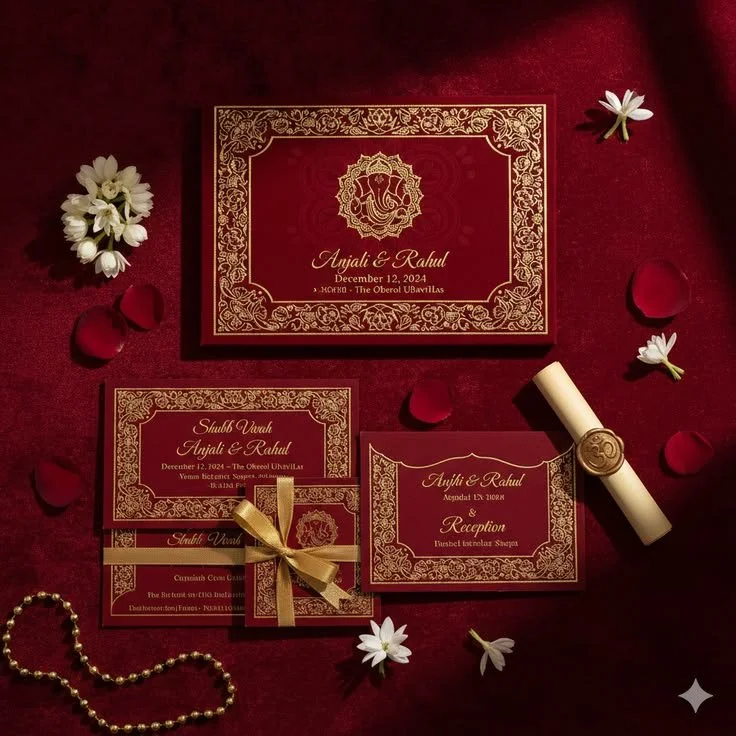
Image Credits: Pinterest
1. Formal Invitations & RSVP Tracking
Mail formal physical or digital luxury invitation suites.
Use separate RSVP cards or online logic gates for each event to prevent guests from showing up unannounced to intimate ceremonies.
2. Baraat Logistics & Municipal Permits
Book the Baraat transportation: classic vintage car, mobile DJ truck, elephant, or decorated horse (ghodi).
Secure city sound permits, street-closure clearances, or resort approvals for amplified outdoor music and smoke bombs.
3. Menu Tastings & Cocktail Formulations
Attend on-site tastings with your caterer to finalize spice levels, live-station presentations, late-night bites, and signature cocktail names.
Read More Here: How to Manage Multi-Event Wedding RSVPs
Phase 5: 2 to 3 Months Out — Detailed Production & Technical Run-Throughs
The broad planning phase is over; now begins technical event production.
Draft Event Master Timelines: Develop minute-by-minute schedules for each day. Factor in heavy buffer times: hair and makeup for large bridal parties (MUA schedules) notoriously run 30–45 minutes behind.
Confirm Lighting & Audio-Visual Specs: Confirm stage dimensions, pin-spotting for floral centerpieces, LED screens for Sangeet videos, and subwoofers tuned for ballroom acoustics.
Finalize Mehndi Logistics: Book dedicated henna artists for your bridal night, and arrange a secondary team of artists for extended female guests during the welcome party.
Order Welcome Bags & Favors: Source personalized welcome gifts, itineraries, and local treats for hotel guest rooms.
Read More Here: Tour Our Gallery of Seamless Multi-Day Indian Celebrations
Phase 6: 1 Month Out — The Final Countdown
Final Hair & Makeup Trials: Test your looks with your veil, headpiece (maang tikka), and nose ring (nath) in place.
Confirm Final Headcounts: Distribute final counts to catering leads, banquet captains, and decor teams.
Audio Cuts & Master Playlist: Submit edited audio tracks for Sangeet dance routines and ceremonial entrance songs to your DJ.
Final Wardrobe Fitting: Try on every single outfit with the exact undergarments, shoes, and jewelry to ensure nothing pinches, gaps, or drags.
Wedding Week: Survival Checklist
| Focus Area | Critical Task | Assigned Person |
|---|---|---|
| Wardrobe | Unpack and professionally steam all silk, velvet, and raw-zari garments | Maid of Honor / Sister |
| Logistics | Distribute printed vendor timelines and parking passes | Wedding Planner |
| Ceremony | Inspect puja samagri basket, coconuts, garlands (varmala), and gold rings | Family Elder / Coordinator |
| Hospitality | Deliver guest welcome boxes to the hotel concierge desk | Groomsman / Brother |
| Finances | Prepare sealed cash envelopes for vendor tips, dakshina, and dhol players | Father / Trusted Family Rep |
Frequently Asked Questions About South Asian Wedding Planning
-
While some couples pull together celebrations in under nine months, the ideal timeframe is 12 to 16 months. This provides the necessary buffer to reserve sought-after venues capable of accommodating multi-event bookings and allows sufficient time for international bespoke wardrobe manufacturing.
-
Utilize customized digital RSVP portals (such as RSVPify or a custom Squarespace site) where conditional logic only displays the specific events that the recipient is invited to attend (e.g., intimate Haldi vs. 400-person Reception).
-
Underestimating hair and makeup (HMUA) durations and wardrobe transitions. Changing out of a 25-pound bridal lehenga into an evening reception gown—complete with hair re-styling and jewelry swaps—takes at least 75 to 90 minutes. Always build a 30-minute buffer into transition timelines.
-
Yes. Ensure your master venue contract explicitly reserves each individual room with dedicated setup and breakdown windows. Decor teams need 4 to 6 hours minimum to build an elaborate Mandap before guests can enter the ceremony foyer.