
Explaining Indian Wedding Traditions to Your Non-Desi Partner’s Family
Photographer: Tori Kelner Photography
"Wait, the Groom Arrives on a Horse? And Why are We Stealing His Shoes?"
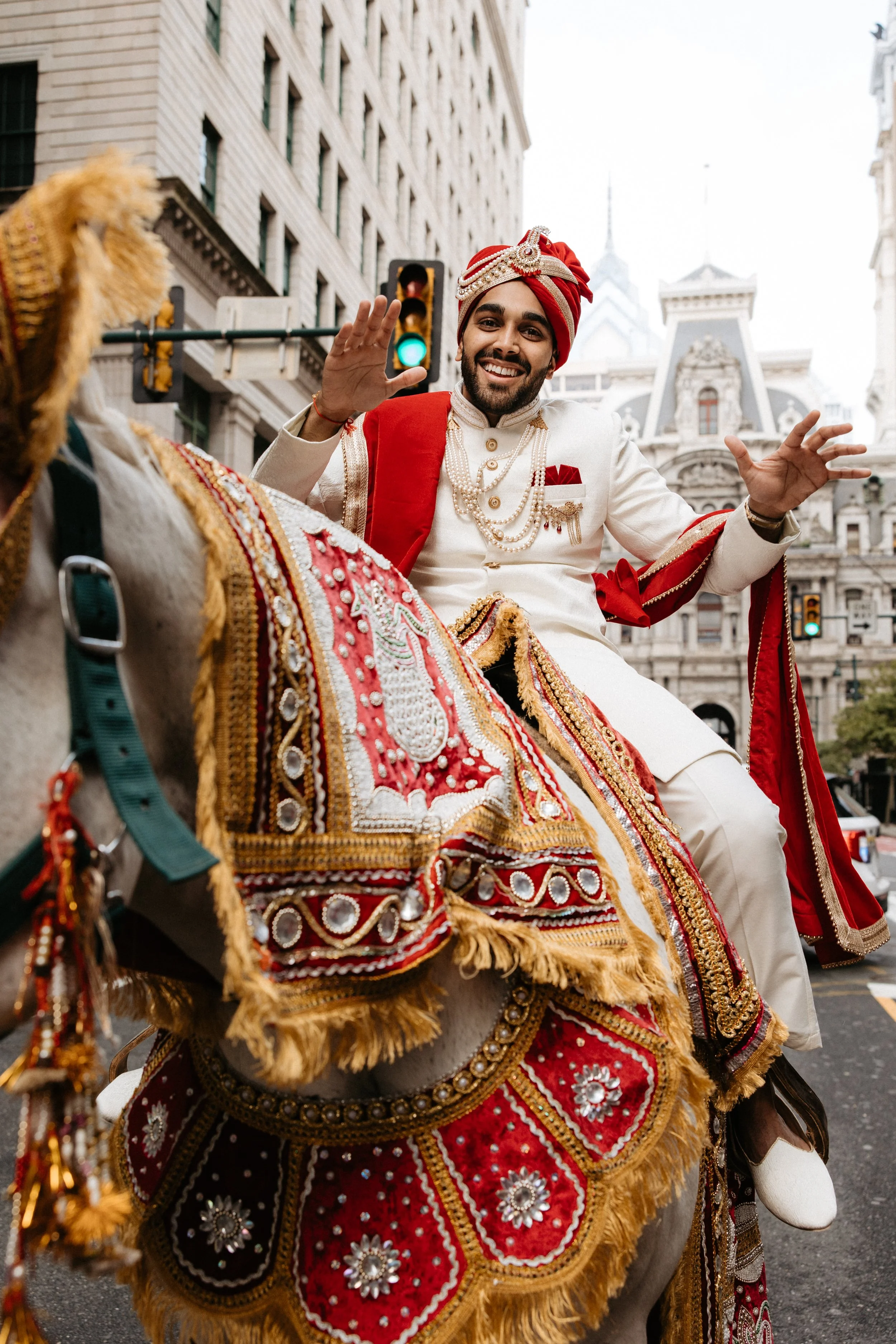
Picture this: Your partner’s parents, who are used to quiet, 4-hour church weddings followed by a polite dinner, are standing in a parking lot. Suddenly, a Dhol player starts drumming at ear-splitting volume, your uncle climbs onto a friend's shoulders to dance, and your fiancé rides in on a decorated white horse looking like a prince. Your future mother-in-law looks terrified, confused, and exhilarated all at once.
Welcome to the beautiful, chaotic world of intercultural weddings. Marrying someone from a different background is a magical fusion of worlds, but explaining the sheer scale, noise, and symbolism of Indian wedding traditions to your non-Desi in-laws can be daunting. You don't want them to feel like outsiders; you want them to feel like family. Here is your cheat sheet for translating the "Desi madness" into meaningful moments they will cherish.
Photo credits: Pinterest.
1. Set Expectations on the Timeline (It’s a Marathon, Not a Sprint)
Western weddings are typically one day. Desi weddings are a festival.
The Explanation: Explain that an Indian wedding is a series of events building up to the main ceremony. Compare it to a "wedding week" rather than a "wedding day."
The Tip: Break down the big three: The Sangeet is the party/rehearsal dinner on steroids; the Ceremony is the spiritual union; and the Reception is the formal celebration. Giving them a printed "What to Expect" guide for each day helps reduce anxiety.
2. Decode the "Baraat" (It’s Not a Riot, It’s Joy)
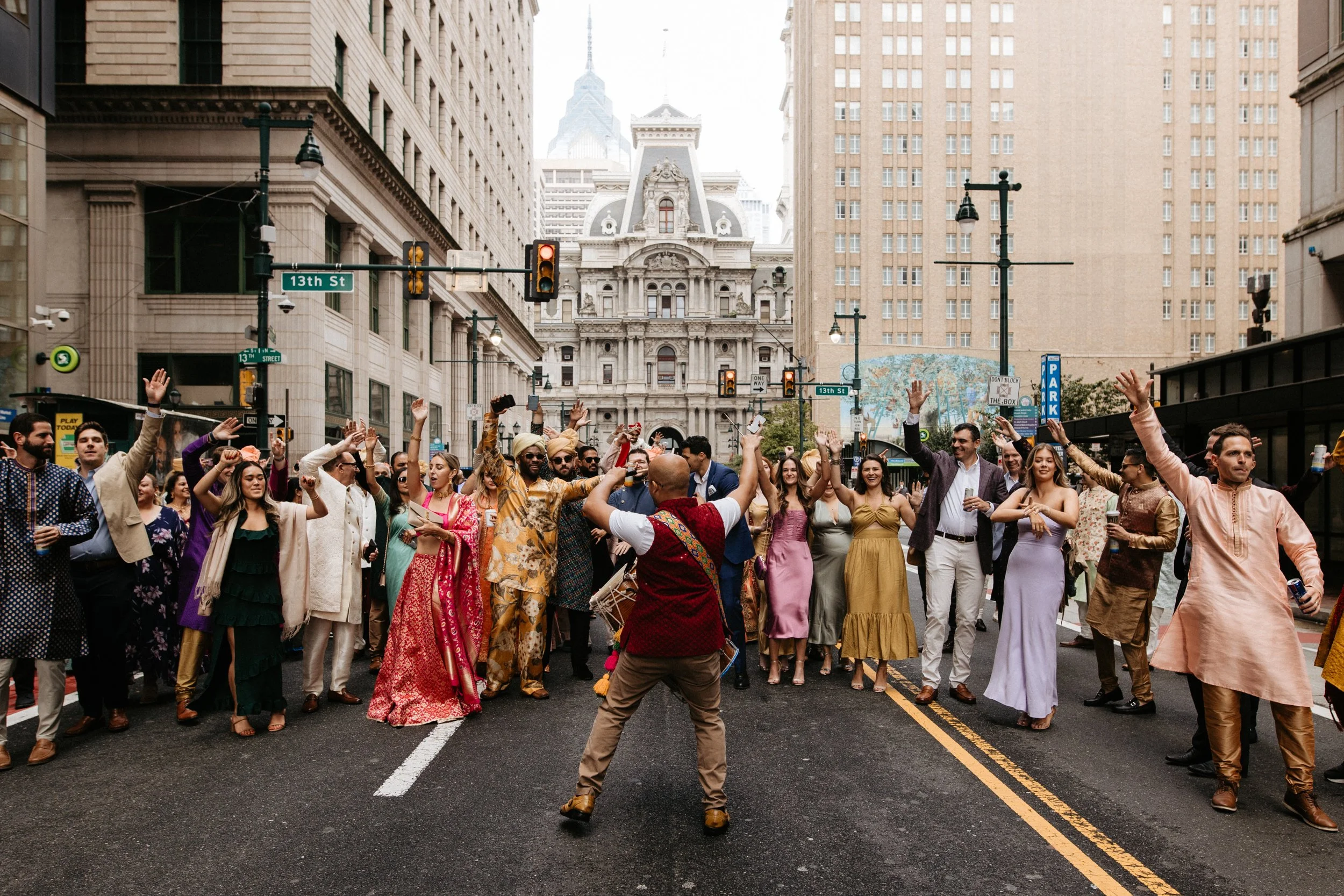
To the uninitiated, a Baraat can look like an unruly mob blocking traffic.
The Explanation: Frame it as a "Groom’s Parade." Explain that in Indian culture, the groom doesn't just sneak in the side door; he is celebrated as a king coming to claim his queen.
The Role: Give your partner's family a role! Teach them a few simple Bhangra moves or give them flower petals to toss. When they participate, they stop observing and start celebrating.
3. The "Shoe Stealing" (Joota Chupai) Warning
This is the one tradition that often causes genuine confusion. "Why are your sisters attacking my son for his shoes?"
The Explanation: Explain that Joota Chupai is a playful icebreaker meant to bond the two families through prankish negotiation. It’s not about greed; it’s about the bride's side asserting their importance and the groom's side paying "respect" (in cash) to get their groom back.
The Tip: Tell your partner to warn their parents so they don't call security when they see a tug-of-war over a mojari!
Photographer: Tori Kelner Photography
4. Clothing Etiquette: Color is Key
Western etiquette says "don't wear white to avoid upstaging the bride." Indian etiquette is a rainbow.
The Explanation: Tell them that in Indian culture, white and black were traditionally associated with mourning (though this is changing). Red is usually the bridal color.
The Advice: Encourage them to wear bright jewel tones—emerald, royal blue, magenta. If they are open to it, take them shopping for a Saree or Kurta. Seeing your non-Desi father-in-law in a Sherwani is a bonding moment you will never forget.
Photography credits: Stock photography.
5. The Food: "Spicy" vs. "Flavorful"
The biggest fear for many non-Desi guests is, "Will I be able to eat anything without burning my mouth?"
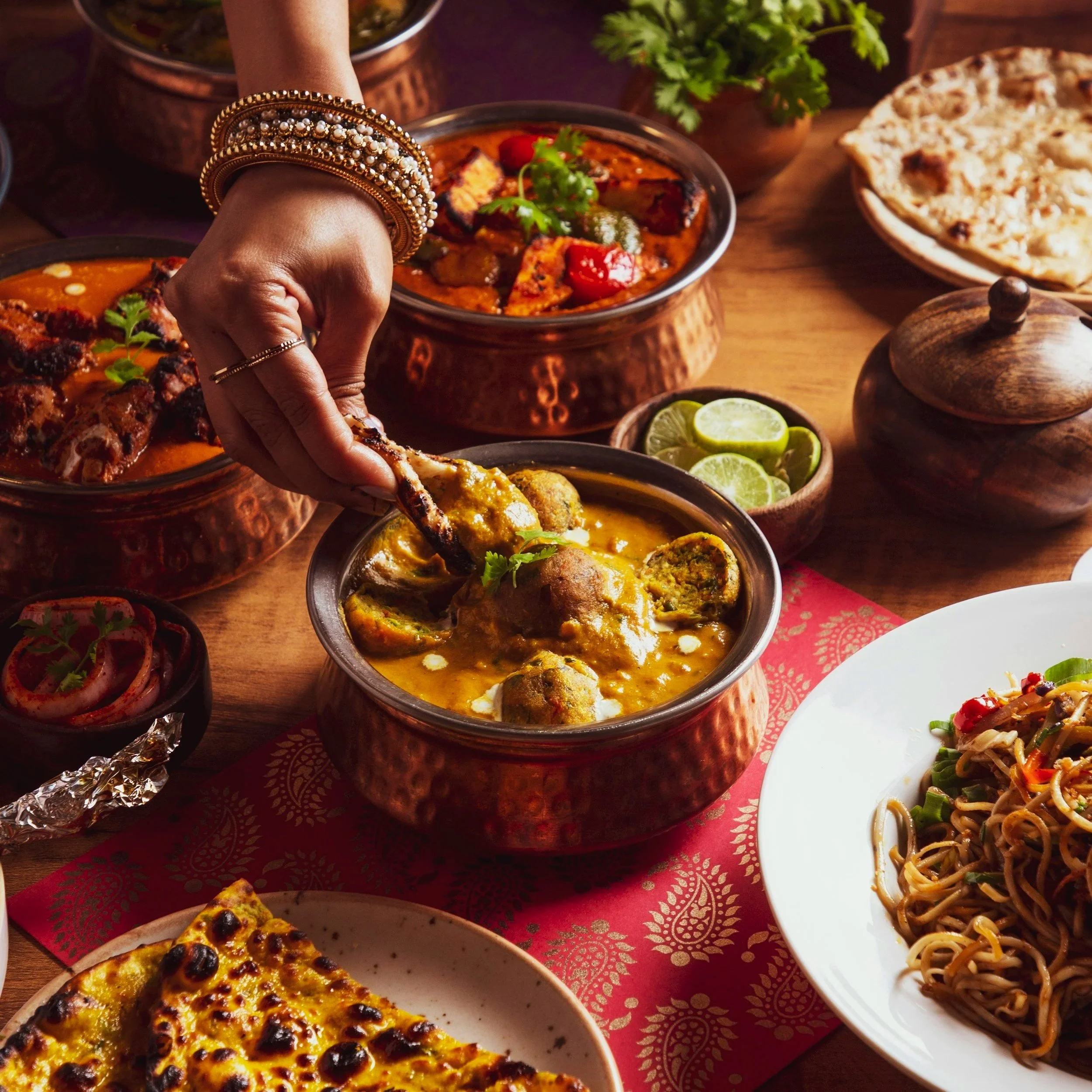
The Explanation: Assure them that wedding food is a feast for the senses. Explain that eating with hands (if you are serving a traditional Sadya) is about connecting with the food, but cutlery is always available.
The Strategy: Ask your caterer to label food clearly with "Spice Levels." Create a "safe zone" of mild dishes (like Butter Chicken, Naan, and milder Dals) so they can explore the cuisine without fear.
Conclusion: Different Roots, One Tree
The goal isn't to turn your partner's family into Indians; it’s to invite them to share in your joy. When you take the time to explain the why behind the what—why we walk around the fire, why we apply turmeric—you transform their confusion into appreciation. You aren't just joining two people; you are knitting together two cultures.