NJ Indian Wedding Planners vs. DIY: Why You Need an Expert in the Garden State
Picture this: It’s 10:00 AM on a crisp Saturday morning in Jersey City. You have 450 guests arriving in two hours, a Baraat route that requires shutting down a lane on a busy New Jersey avenue, three specialized caterers unloading multi-course Gujarati and Punjabi dishes, a floral team building an elaborate Mandap under strict venue fire-code restrictions, and a DJ testing sound across a 15,000-square-foot ballroom.
Now imagine trying to manage all of that while wearing a 20-pound designer lehenga or sherwani, with a phone that won't stop ringing.
South Asian celebrations are magnificent, vibrant, and deeply meaningful—but from a logistical perspective, they are essentially multi-day corporate conventions with emotional stakes. While the DIY approach works for a 75-person rustic dinner party, orchestrating a multi-day Indian wedding in New Jersey without a professional is one of the most high-risk decisions a couple can make.
In this guide, we break down the reality of planning an Indian wedding in the Garden State, comparing the DIY route with hiring an experienced New Jersey Indian wedding planner, so you can decide what’s truly best for your big day.
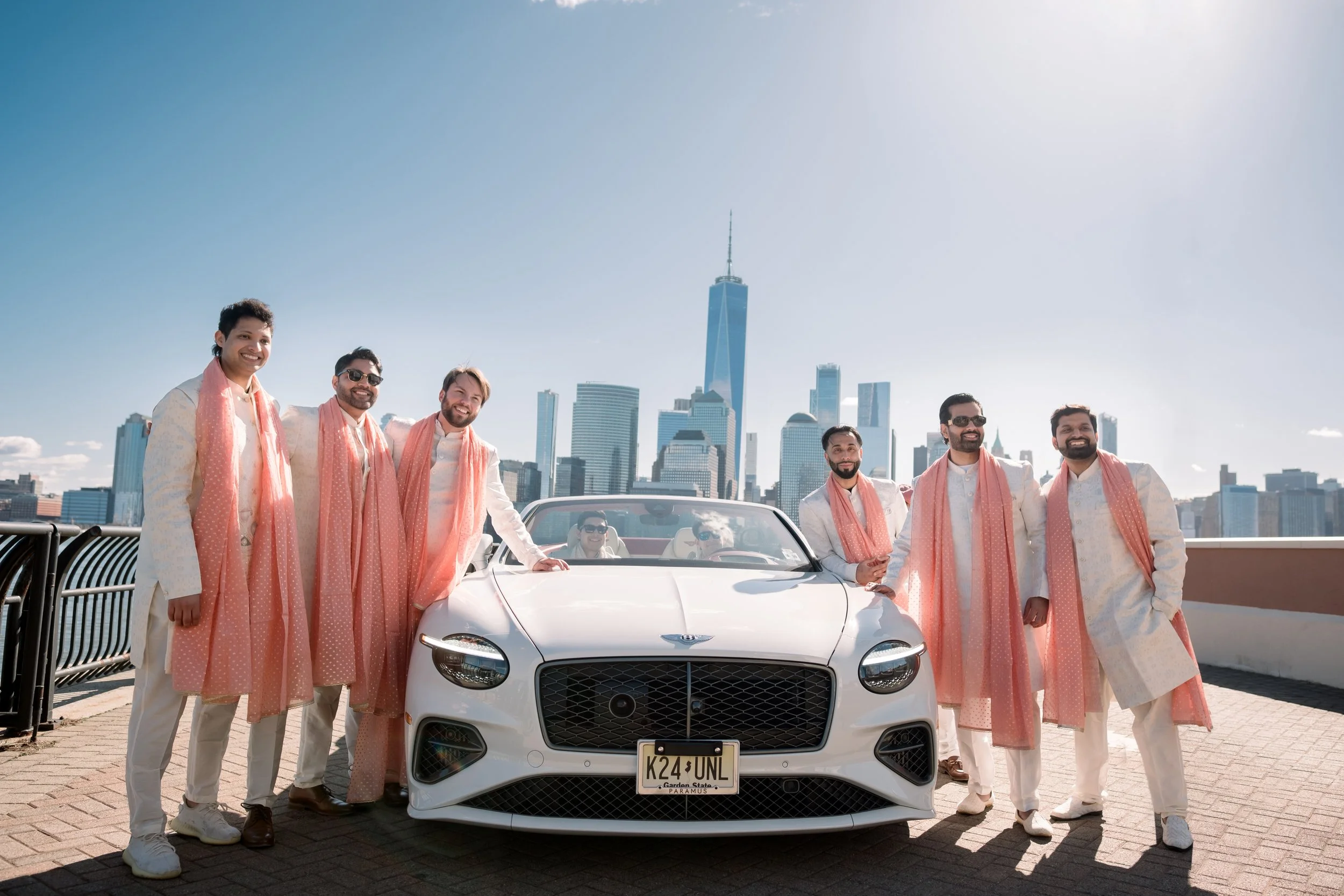
Image credits:
Photography: Wedding by Shooting Stars | IG: @weddingbyshootingstars
Planner - Tum Hi Ho Events
Venue - Hyatt Regency - Jersey City
The Scale of South Asian Weddings in New Jersey
New Jersey is widely recognized as the epicenter of South Asian culture on the East Coast. From world-class Indian wedding venues in Edison, Parsippany, and Princeton to easy proximity to New York City and Pennsylvania, the Garden State offers unparalleled resources. However, that abundance comes with intense logistical complexity.
A typical Indian wedding involves:
3 to 5 distinct events (Mehndi, Haldi, Sangeet, Garba, Vidhi, Ceremony, and Reception).
300 to 800+ guests traveling locally and internationally.
15 to 25 specialized vendors (live dhol players, henna artists, specialized decorators, South Asian caterers, priests, lighting technicians, and photographers).
Strict timing windows based on auspicious मुहूर्त (Muhurat) times determined by priests.
Attempting to coordinate these moving pieces on your own often transforms what should be a joyful celebration into a full-time, high-stress management operation.
Read More Here: Full Service Indian Wedding Planning
The Hidden Challenges of the DIY Indian Wedding Approach
Many couples consider DIY planning to trim budgets or maintain total creative control. While the intention is understandable, South Asian weddings in New Jersey introduce hyper-specific hurdles that standard DIY advice doesn't account for.
1. Navigating Local Permits and Municipal Regulations
A traditional Baraat—the groom’s vibrant procession with music, dancing, and often a horse or open-top vehicle—requires specific municipal permits in NJ townships.
Do you know which townships require police escorts for street closures?
Have you checked local noise ordinance cutoff times for outdoor Sangeet parties?
Does your venue permit the sacred fire (Agni) for the Pheras indoors?
An experienced NJ Indian wedding planner maintains active relationships with municipal offices and venue management teams, ensuring all permits and safety compliance requirements are secured months in advance.
Read More Here: New Jersey Division of Consumer Affairs - Event & Venue Guidelines
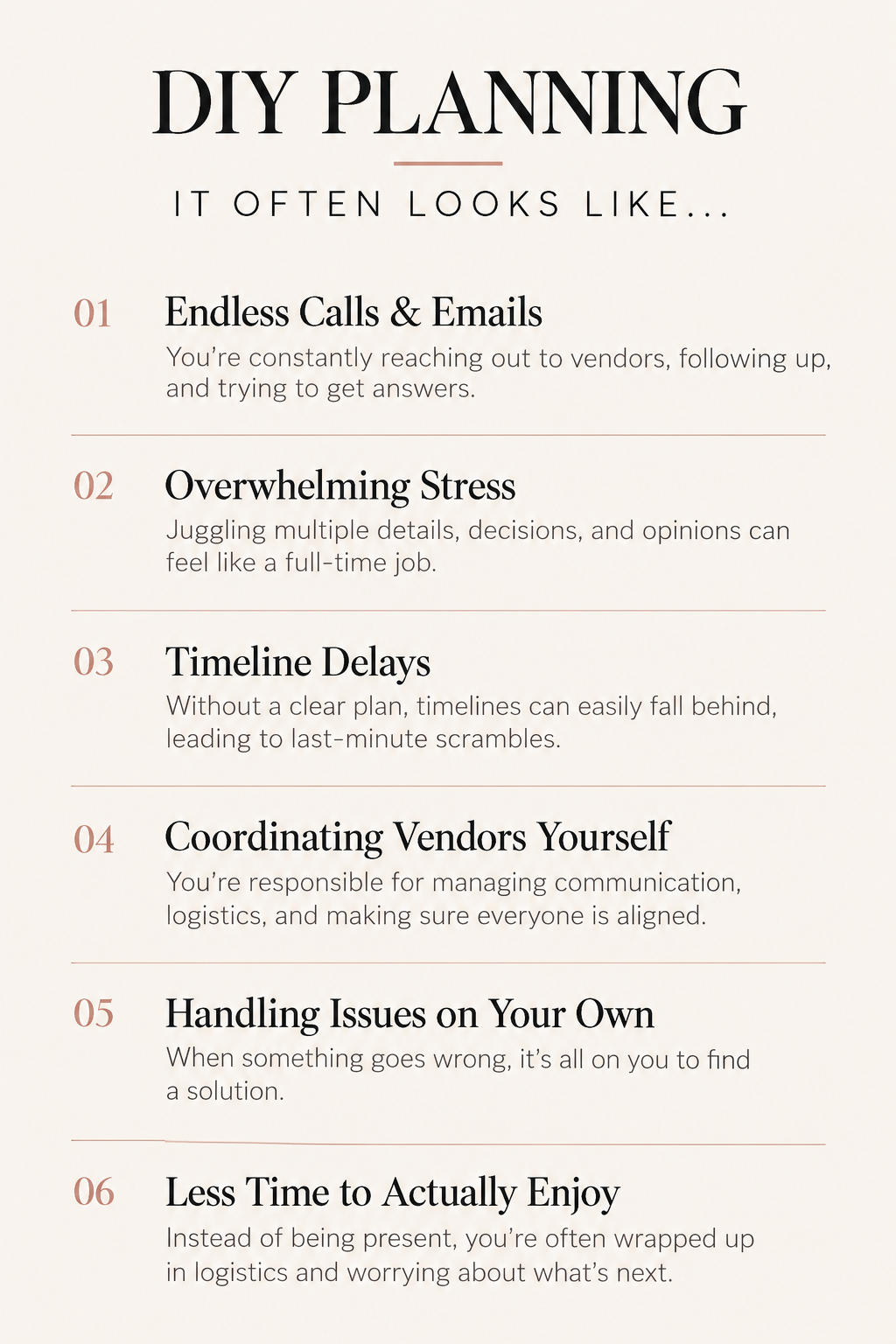
2. Vendor Management Across Multiple Days
Unlike standard single-day weddings, South Asian celebrations require coordinating multiple vendor teams across different locations over two to four days.
When you DIY, you become the central hub for every question, delay, or conflict:
What happens when the floral truck gets stuck in I-95 traffic during Friday evening rush hour before the Sangeet?
Who coordinates the caterer’s live chaat stations while you are taking bridal portraits?
Who ensures the priest has every specific Puja item prepared on time?
Without a dedicated planner, these responsibilities fall on you, your parents, or your bridal party.
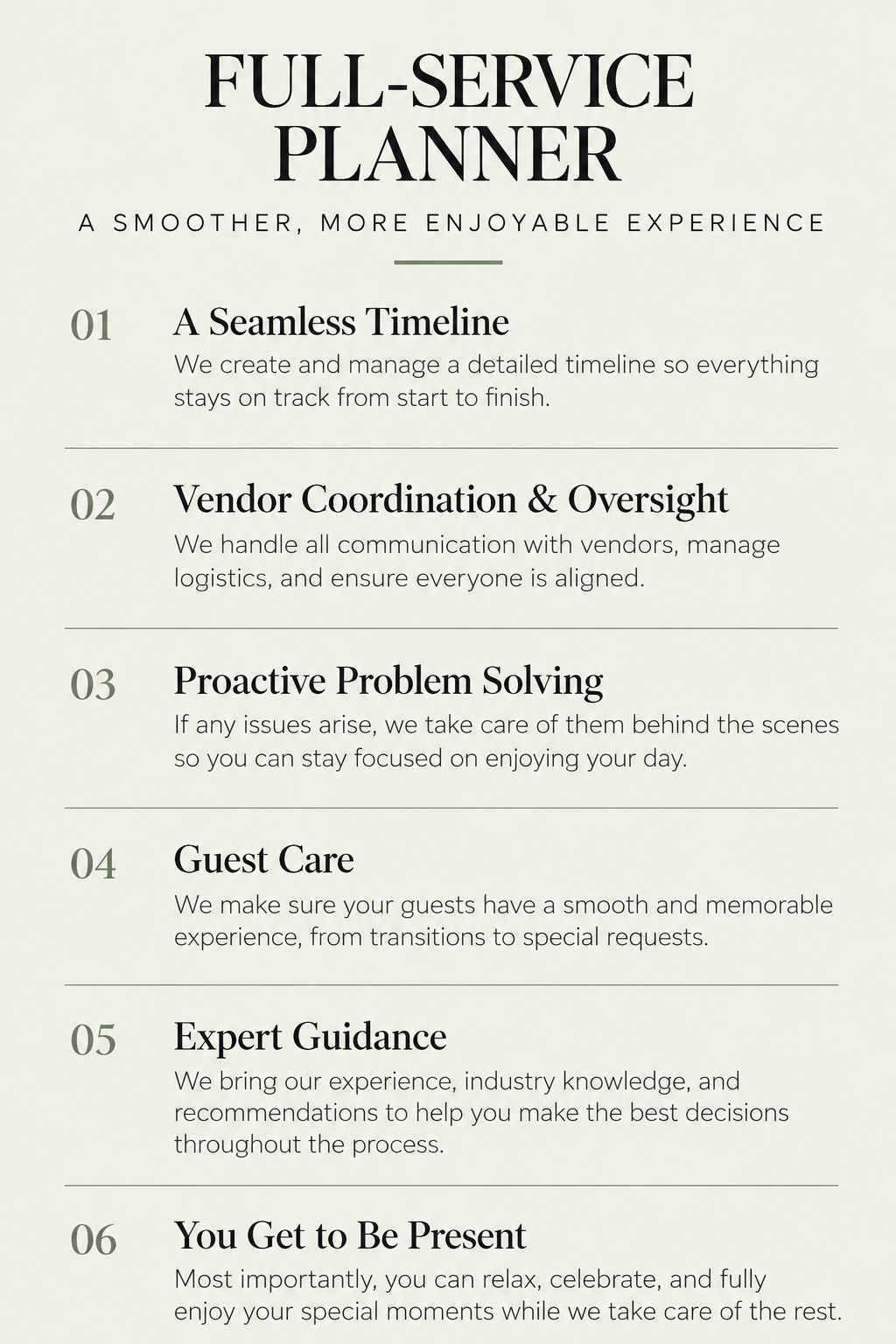
5 Reasons Why Hiring a New Jersey Indian Wedding Planner Pays Off
1. Exclusive Access to Top South Asian Wedding Vendors
The premier South Asian caterers, decorators, DJs, and photographers across New Jersey, NYC, and Pennsylvania book up 12 to 18 months in advance. Veteran planners hold long-standing relationships with these elite vendors. They know:
Which decorators can execute an intricate Mandap transformation within tight 3-hour setup windows.
Which caterers excel at authentic fusion menus vs. traditional regional cuisines.
How to negotiate contractual terms, vendor meal clauses, and service guarantees to protect your investment.
2. Precise Muhurat and Multi-Event Timeline Management
Timing in Indian weddings is both a spiritual requirement and a financial necessity. If your Muhurat for the ceremony is set for exactly 10:15 AM, a 30-minute delay in hair and makeup can throw off the entire day's schedule, leading to expensive overtime fees from venues and crews.
A professional planner crafts down-to-the-minute master timelines for every vendor, family member, and VIP, keeping the day running effortlessly without compromising sacred rituals.
Read More Here: The Knot - Indian Wedding Timeline Guide
3. Protecting Family and Guest Experience
In South Asian culture, hospitality (Atithi Devo Bhava) is paramount. When parents and relatives are burdened with setup, troubleshooting, or directing guests, they miss out on the emotional highlights of the wedding.
By hiring a dedicated planning team, your family gets to step into their role as honored hosts rather than event staff.
4. Venue-Specific Expertise in NJ, NY, and PA
From grand hotel ballrooms along the Hudson River waterfront to expansive estate venues in Central Jersey and Bucks County, PA, every venue has unique operational constraints. Professional planners know loading dock limitations, freight elevator sizes, sound limits, and power distribution requirements necessary for heavy production setups.
Read More Here: Maharani Weddings - Top South Asian Wedding Venues in New Jersey
5. Budget Protection & Value Optimization
While hiring a planner is an investment, expert strategists often save couples thousands of dollars by preventing costly contract oversights, avoiding unnecessary vendor add-ons, negotiating package upgrades, and managing vendor gratuities efficiently.
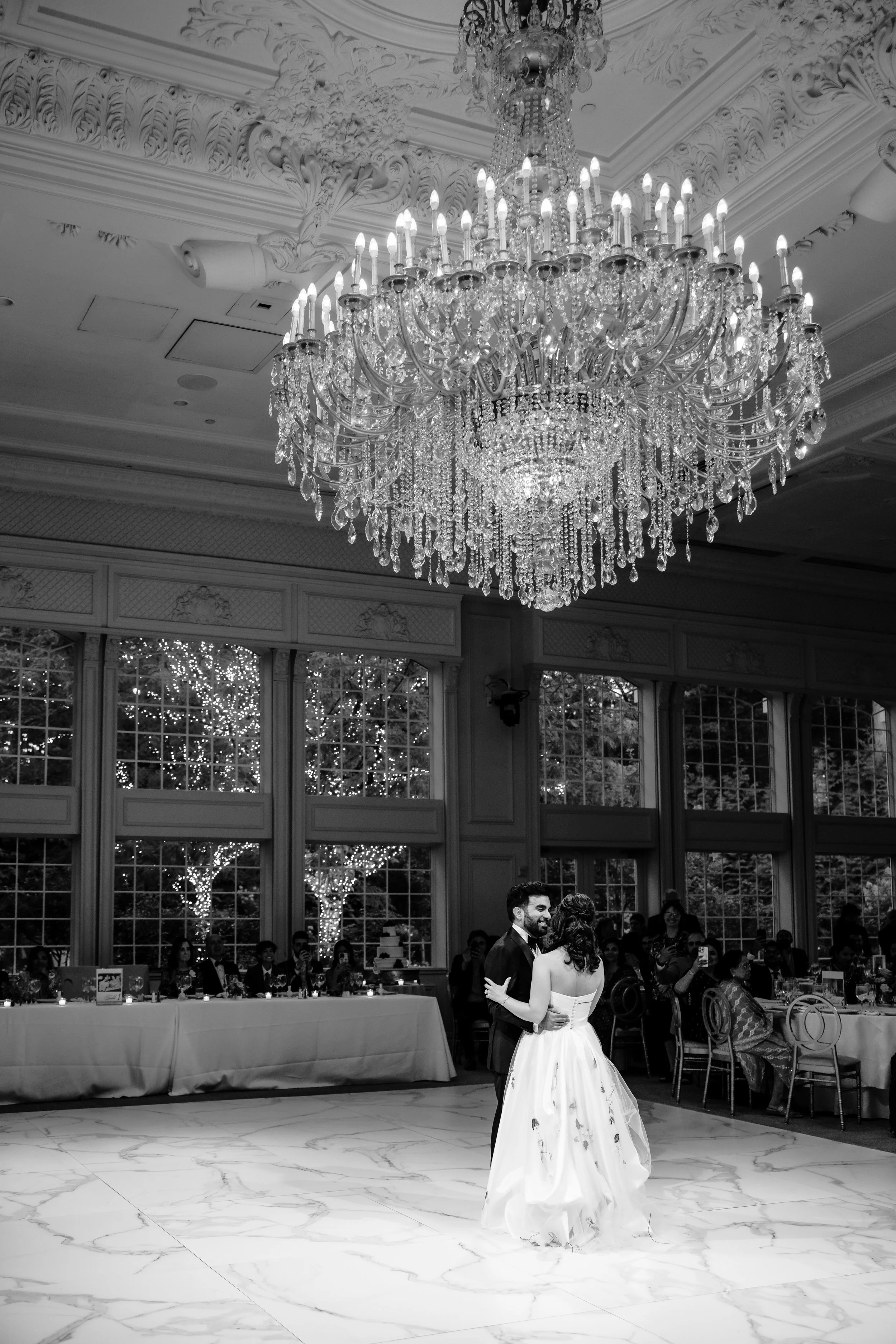
Image credits:
Photography: Sarah Bode-Clark Photography | IG: @sarahbodeclark
Planner - Tum Hi Ho Events
Venue - Old Tappan Manor
Direct Comparison: DIY vs. Professional NJ Indian Wedding Planner
| Feature / Scenario | DIY Approach | Professional NJ Wedding Planner |
|---|---|---|
| Vendor Selection | Cold outreach, online reviews, uncertain reliability | Curated network of proven South Asian specialists |
| Baraat Logistics | Navigating permits and police escorts independently | Full permit management, route planning, & vendor sync |
| Sacred Fire Permits | Risk of venue refusal or last-minute fire marshal issues | Pre-vetted venues & compliant indoor fire setups |
| Multi-Day Coordination | Managed by couple, family, or stressed friends | Dedicated lead planners & assistants for every event |
| Budget Management | Hidden costs, unexpected vendor fees | Strategic budget allocation & contract optimization |
Frequently Asked Questions (FAQs)
-
Because top South Asian wedding venues and vendors in New Jersey and the tri-state area book quickly, it is best to hire a full-service planner 12 to 18 months before your target wedding date. If you already have your venue, partial planning or month-of coordination should be secured 6 to 9 months in advance.
-
Absolutely. Destination and out-of-state planning is extremely common for New Jersey weddings. An expert local planner serves as your boots on the ground—conducting venue walkthroughs, managing vendor meetings, handling local permits, and keeping you updated via digital planning portals and virtual consultations.
-
A venue coordinator works directly for the venue to protect their facility, oversee food service (if in-house), and manage venue staff. A dedicated South Asian wedding planner works strictly for you—managing your entire multi-day schedule, coordinating all external vendors, overseeing rituals and sacred items, and taking care of your personal needs and family dynamics.
-
South Asian weddings require specialized knowledge of cultural traditions, multi-day scheduling, sacred fire safety, complex catering requirements, and unique vendor setups (such as Baraat logistics and Mandap construction). Hiring a planner specializing in South Asian celebrations ensures no cultural nuances or logistical requirements are overlooked.