
South Indian vs. North Indian Wedding Traditions: What’s the Difference?
Sunrise Soul vs. Midnight Masala: The Great Indian Wedding Divide
Imagine two weddings. In one, the ceremony begins at the crack of dawn; the air is filled with the soulful, rhythmic melody of the Nadaswaram, and the bride glows in a rich golden Kanjeevaram silk saree. In the other, the festivities kick off late at night; the groom arrives on a white horse dancing to the thunderous beat of the Dhol, and the bride sparkles in a heavy, embroidered red lehenga.
Both are vibrant, both are emotional, and both are quintessentially Indian. But the differences between a South Indian wedding and a North Indian wedding are as vast as the geography between Chennai and Delhi. From the timing of the pheras to the flavor profile of the feast, here is your ultimate guide to understanding the diverse beauty of India’s wedding cultures.
1. The Clock: Early Risers vs. Night Owls
The biggest culture shock for guests attending their first cross-regional wedding is the schedule.
South Indian Weddings: These are strictly governed by the Muhurtham (auspicious time), which often falls in the early morning hours. It is common for ceremonies to begin as early as 4:00 AM or 6:00 AM. The vibe is serene, spiritual, and focused on the rituals.
North Indian Weddings: These are known for being marathon parties that go late into the night. The Baraat (groom's procession) might start at 7:00 PM, but the actual wedding ceremony (Pheras) often doesn't happen until midnight or even later.
2. The Bridal Trousseau: Silk vs. Sparkle
While both brides look breathtaking, their fashion choices are distinct.
The South Indian Bride: The hero of her look is the Kanjeevaram Silk Saree. Traditionally, there is no veil covering the face. The jewelry is heavy temple gold, often featuring motifs of gods and goddesses, and her hair is braided with fresh jasmine flowers (Mallipoo).
The North Indian Bride: The staple is the Lehenga Choli, usually in shades of red, maroon, or pink (though pastels are trending!). She covers her head with a Dupatta. The jewelry is often Polki, Kundan, or diamonds, focusing on sparkle and grandeur.
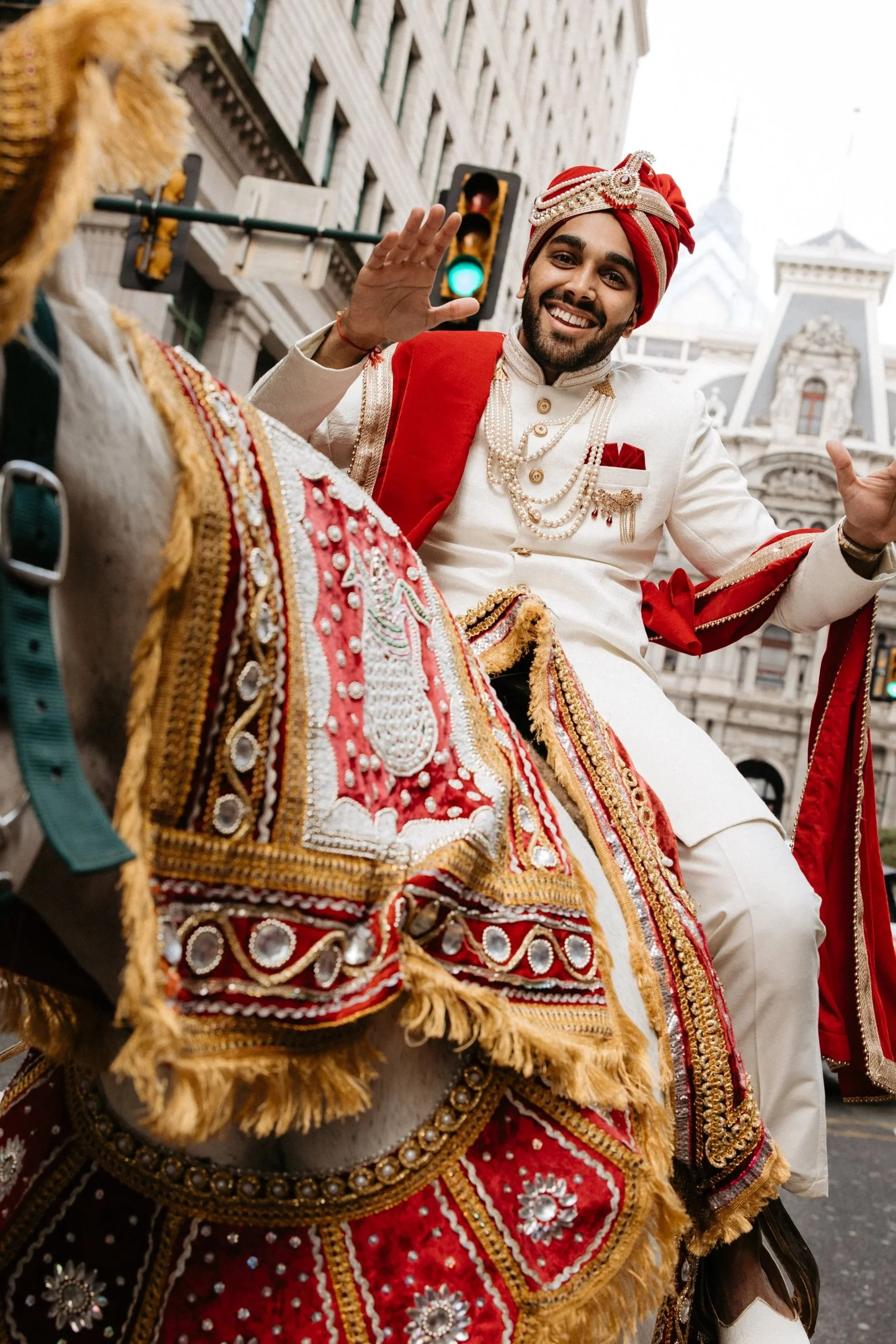
Photo credits: Tori Kelner Photography
3. The Groom’s Entrance: Walking vs. Dancing
South: The groom’s arrival, known as Kashi Yatra (in Tamil/Brahmin weddings), is a symbolic ritual where he pretends to leave for a pilgrimage, and the bride's father convinces him to stay and marry. It is playful but relatively low-key compared to the North.
North: The Baraat is a high-energy street parade. The groom rides a horse (or elephant, or vintage car), surrounded by friends and family dancing to a live band or DJ. It is loud, boisterous, and can last for hours before he even enters the venue.
4. The Rituals: Oonjal vs. Jaimala
South (Oonjal): A unique and charming tradition is the Oonjal ceremony, where the couple sits on a swing. Married women sing songs, offer milk and bananas to the couple, and ward off evil spirits. It represents the couple navigating the ups and downs of life together.
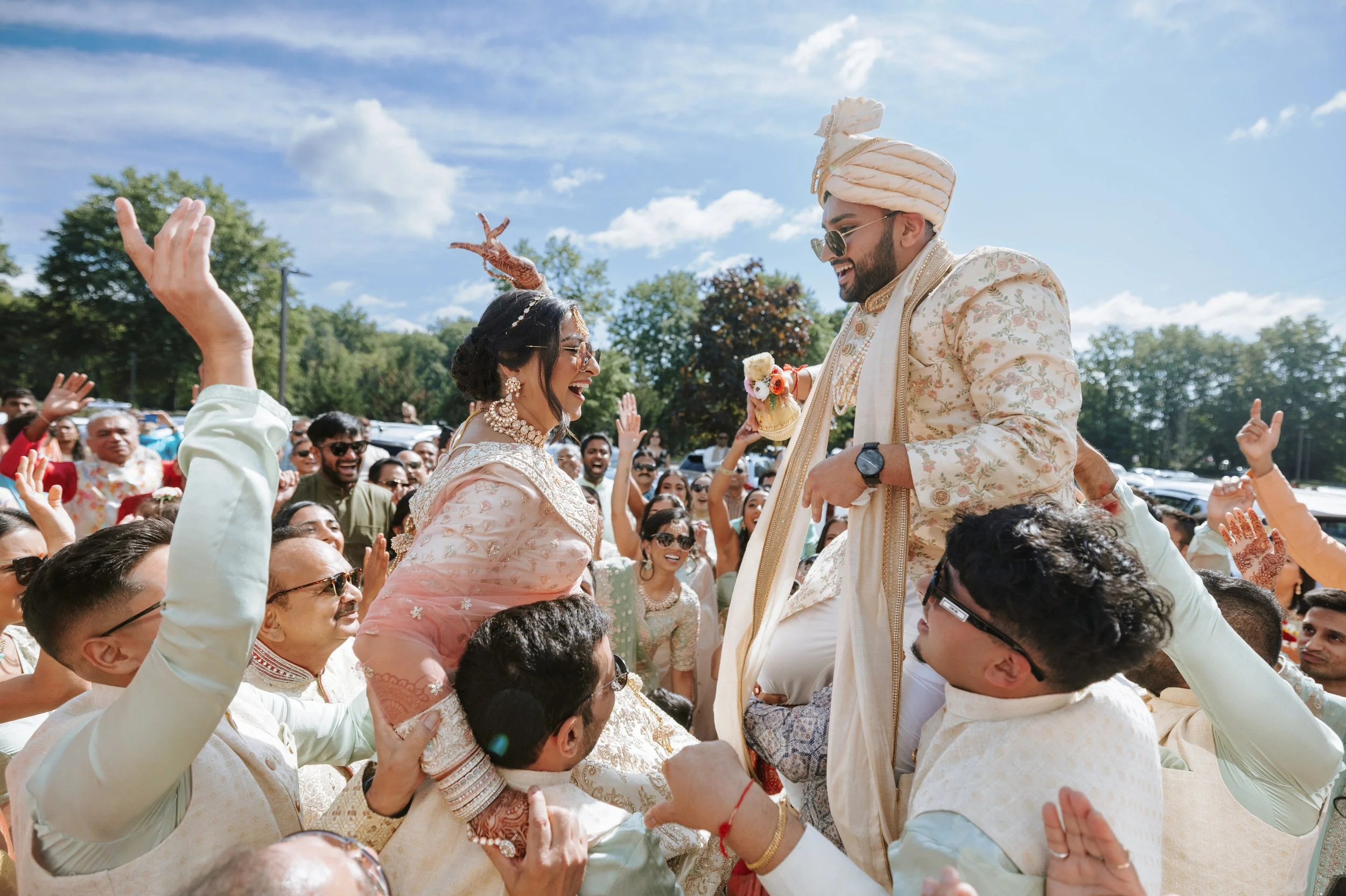
North (Jaimala/Varmala): The exchange of floral garlands is a playful battle. The bride and groom's friends often lift them high up on chairs, making it difficult for the other to put the garland on. It represents the acceptance of the partner.
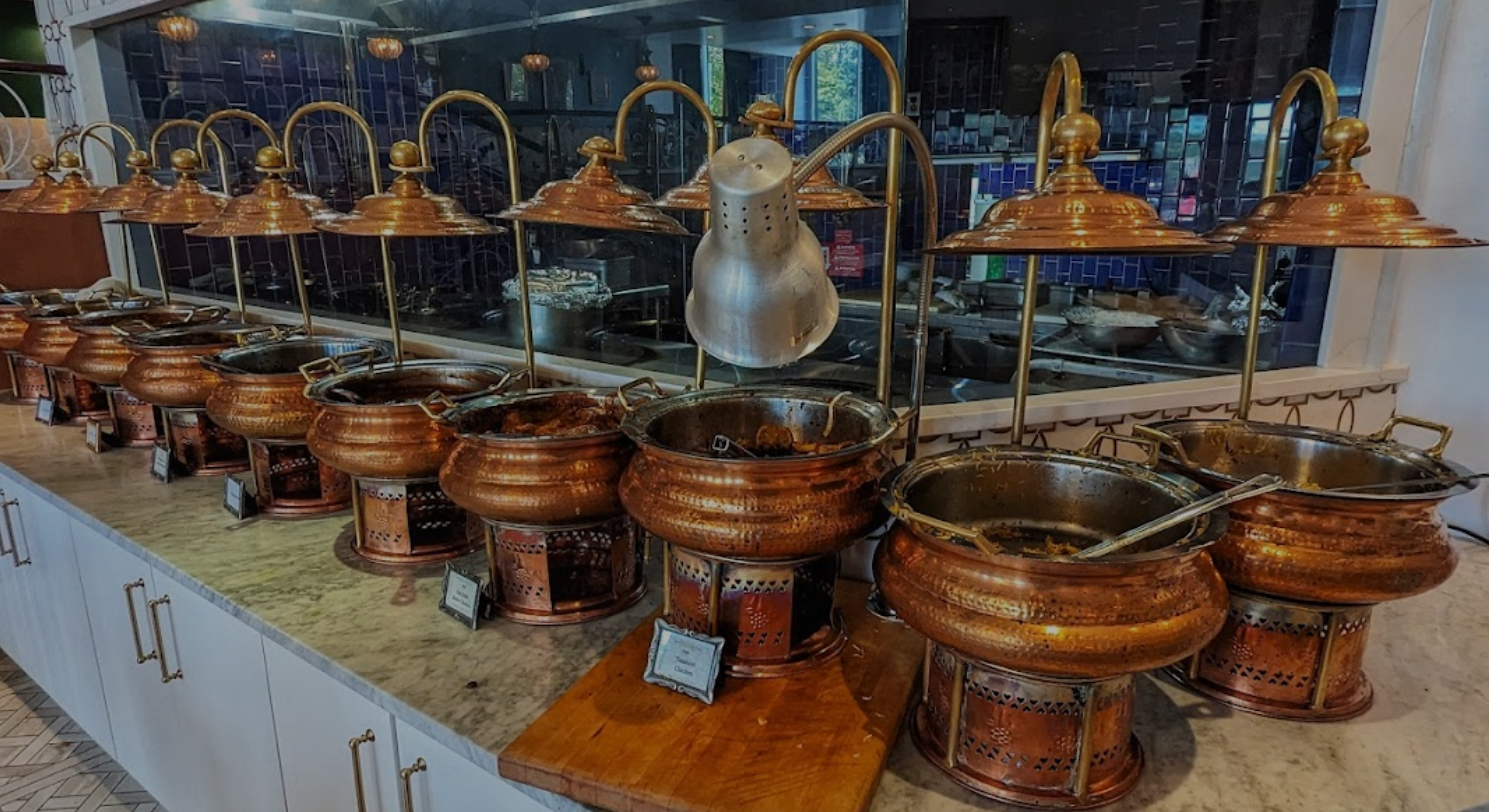
Image credits: Moghul Caterers (New Jersey based)
5. The Feast: Sadya vs. Buffet
Food is the soul of any Indian wedding, but the menus are worlds apart.
South: The traditional meal is the Sadya (feast), often served on a banana leaf. It includes rice, Sambar, Rasam, Avial, and Payasam. It is typically a sit-down meal where servers circulate with buckets of food.
North: It is all about the lavish buffet spread. Expect rich curries like Butter Chicken and Paneer Makhani, a live Tandoor station for fresh Naans, and an endless array of heavy appetizers and desserts like Gulab Jamun and Jalebi.
Conclusion: Different Roads, Same Destination
Whether you are waking up for a sunrise Mangalsutra moment or dancing until 2 AM at a Sangeet, the heart of the celebration remains the same. Both traditions honor family, commitment, and the joyous union of two souls. The best part? In modern India, many couples are blending these traditions—serving Dosa stations at a Sangeet or wearing Lehengas for a morning ceremony—creating a beautiful "Two States" fusion that celebrates the best of both worlds.